




None of us enjoy cleaning. There's nothing wrong with that. However, cleaning is our responsibility, so we shouldn't avoid it in any way. It's also worth knowing that when it comes to the cleaning process, it's not only about maintaining cleanliness in our home, but also – and we mustn't forget this – it's about ensuring that the furniture we own is well looked after. Unfortunately, this isn't always the case, and despite our efforts, the furniture we have deteriorates. This is most often the result of poorly executed work. How should we clean and care for furniture so that it doesn't get damaged? What steps should we take here?
.jpg)
First and foremost – cleaning products
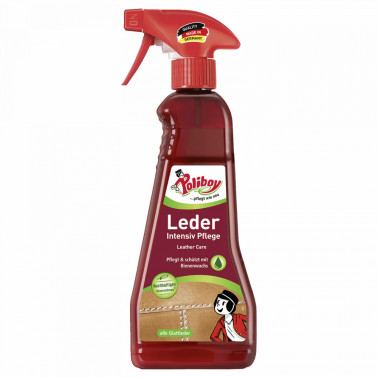
What we absolutely must pay attention to, and this should be our first priority, is the matter of selecting the right quality cleaning product for our furniture. We'll clean wooden furniture quite differently from living room furniture made from, say, MDF boards. In the case of the former, we must definitely get ourselves a cleaner for wooden furniture. This will primarily protect it from, for example, excessive moisture absorption. Using the wrong product may not be noticeable after one or two applications, but over the longer term – it certainly will be. Using an inappropriate furniture cleaning product is the most common cause of furniture deterioration. However, this isn't the only cause. So what else will matter to us?
Not all cloths are created equal
Another matter we must bear in mind when it comes to proper furniture care is the question of what type of cloths or sponges we'll use for this purpose. This seemingly trivial matter can also prove very important when it comes to the long-term effects of its implementation. We should really get ourselves two types of cloths. The first – for 'dry' cleaning and the second – for 'wet' cleaning. The cloth for dry cleaning should ideally be cotton and smooth. The one for wet cleaning – ideally it should be somewhat fluffier – universal cloths made from specialist fabric work brilliantly here. Such a solution will be ideal, regardless of what your furniture is made from.
.jpg)
What about upholstery?
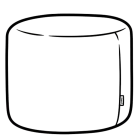
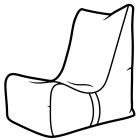
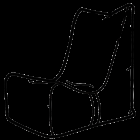
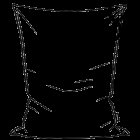
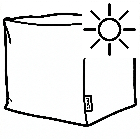
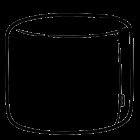
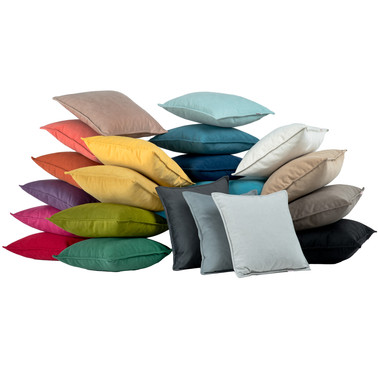
We must remember, however, that it's not only wooden furniture or furniture made from MDF that will constitute important elements of our interior décor. Sofas and armchairs are also very important, and as we know, 99% of these are upholstered. Consequently, the process of cleaning them is also quite different. However, one thing doesn't change: the method of cleaning upholstered furniture must also be matched to what material they're made from. Ideally, of course, we should get ourselves specific cleaning products designed for upholstered furniture – there's quite a lot of this on the market. However, it sometimes happens that we don't need to buy specialist products for cleaning armchairs or poufs at all. When we're dealing with beanbag-type poufs, cleaning them is much simpler.
.jpg)
How to clean bean bags and beanbag poufs?
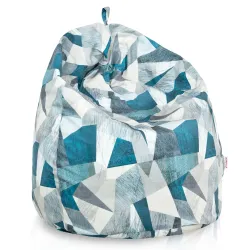
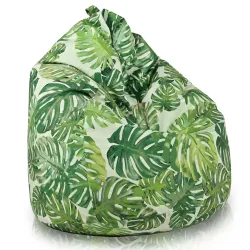
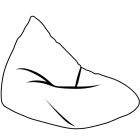
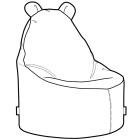
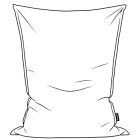
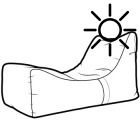
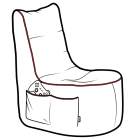
Whilst cleaning classic upholstered furniture may seem somewhat problematic, in the case of poufs, armchairs or even beanbag tables, it's absurdly simple. We must start by noting that most fabric models have two types of covers: outer and inner. This solution has enabled the implementation of an easy-clean system. Covers made of Outdoor fabric and eco-leather are waterproof. Thanks to this, juice, coffee or wine spilt on them can simply be wiped off. All you need is a dry, universal cloth and the problem is solved. However, if we're dealing with, say, a situation where our child has drawn on such a cover with a pen, marker or even crayon, we need to remove the outer cover and wash it. Before doing so, however, we must familiarize ourselves with the washing instructions for this type of cover. The process won't always look the same. Nevertheless, precisely because most fabric models have two covers, keeping them clean is almost as simple as it is with wooden furniture or furniture made from MDF boards.
.jpg)