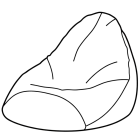
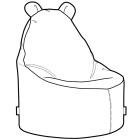
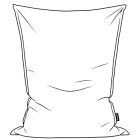
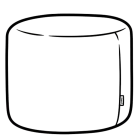
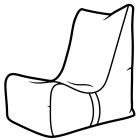
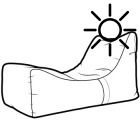
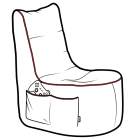
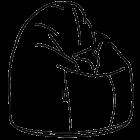
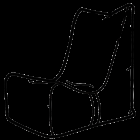
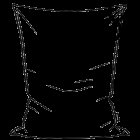
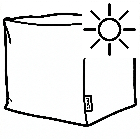

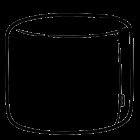
A bean bag with your logo is a fantastic promotional tool — it offers a large surface area, a soft form, and is perfect for chillout zones. However, the final effect depends on the printing technique you choose and the fabric used. In this guide, we compare four techniques we use in the production of custom-printed bean bags and advise which to select for small runs and which for hundreds of pieces.
Four Printing Techniques — A Comparison
| Technique | Best For | Colors | Volume | Durability |
|---|---|---|---|---|
| Sublimation | light polyester, velvet, outdoor fabric | full CMYK + photos | medium-large | very high (dye in the fiber) |
| DTG (Direct to Garment) | cotton and blends | full color | small runs | high |
| Screen Printing | large surfaces, simple logos | 1-3 colors | large (low unit cost) | highest |
| Heat Transfer | small runs, sharp logos and texts | color + details | small | high |
Sublimation — Full Color and Photos
This is our default technique for full-color projects. We print in CMYK with no color limits directly onto the fabric sheet from which the bag is made — this allows for gradients, photographs, and full key visuals, not just flat logos. The dye penetrates the fiber, so it won’t crack or fade. Condition: light polyester fabric (velvet ~320 g/m² or outdoor ~220 g/m²).
DTG — Small Runs in Full Color
Direct printing on fabric works well for short runs with rich colors, especially on cotton and blends. A good option when you need a few to several pieces with a full-color design without the costs of preparing screens.
Screen Printing — Large Volumes, Lowest Unit Cost
For hundreds of pieces with a simple, 1-3 color logo, screen printing wins on price and durability. It requires screen preparation, so it’s not cost-effective for single pieces, but for a large roadshow or a series for a franchise network, it’s the cheapest solution per piece.
Heat Transfer — Single Pieces and Sharp Details
For 1-2 pieces, fine texts, and sharp logos, heat transfer provides excellent results without startup costs. Ideal for sampling, competition prizes, and concept presentations for agency clients.
How to Choose a Technique — Quick Reference
- 1-2 pieces, sampling → heat transfer or DTG
- full-color design / photo → sublimation
- hundreds of pieces, simple logo → screen printing
- outdoor event → sublimation on outdoor fabric (water)
File Preparation
Regardless of the technique: vector (AI, EPS, PDF) or bitmap min. 300 dpi at 1:1 scale, colors in CMYK. The standard print area is 45 × 45 cm, with the possibility of printing in several locations. Before production, we send a proof for approval.
FAQ — Printing on Bean Bags
Which printing technique is the most durable?
Screen printing and sublimation. In sublimation, the dye penetrates the fiber, so it won’t fade or crack; screen printing provides a very durable, thick layer of ink on a simple logo.
Can I print a full-color photo on a bean bag?
Yes — with sublimation, we print in CMYK with no color limits on the fabric sheet before sewing, so gradients and photographs are possible on light polyester fabric.
What is the minimum order for screen printing?
Screen printing is cost-effective for larger volumes due to screen preparation. For single pieces, we recommend heat transfer or DTG — our MOQ starts from 1 piece.
Will the print withstand use at an event?
Yes. All techniques are selected for intensive use; for outdoor versions, the print is additionally resistant to water. The material comes with a 24-month warranty.
What file should I prepare for printing?
A vector (AI, EPS, PDF) or bitmap min. 300 dpi at 1:1 scale, in CMYK color space. You will receive a proof for approval before production.
Not sure which technique to choose? Send us your design and quantity — we will select the optimal method and prepare a quote for custom-printed bean bags and poufs.