




Why is it worth regularly washing the beanbag cover?
A beanbag is a piece of furniture that we use every day – we watch movies on it, read books, and children use it as a playground. It’s natural that the cover gets dirty over time. Regularly washing the cover not only extends the life of the furniture but also maintains the hygiene of the household. At Italpouf, we designed our beanbags with easy maintenance in mind – on most models the outer cover can be removed and washed in the machine at 30°C. This way, your pouf always looks like new, and you avoid costly visits to the dry cleaner.
Instructions: how to remove the cover from the beanbag step by step
- Prepare for work: Before you start, make sure you have everything you need at hand. Prepare the beanbag and a clean space where you will be working.
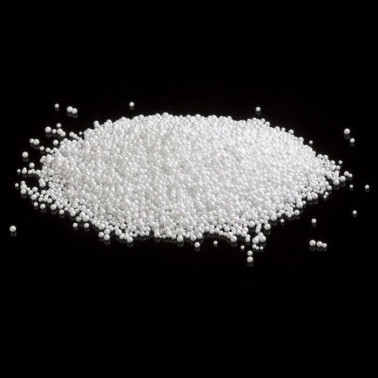
- Secure the workspace: It’s best to perform this task on a smooth surface, such as ceramic tiles or floor panels. Avoid carpets, rugs, or floor mats. If possible, work outside or in a room that is easy to clean in case of spillage of polystyrene beads.
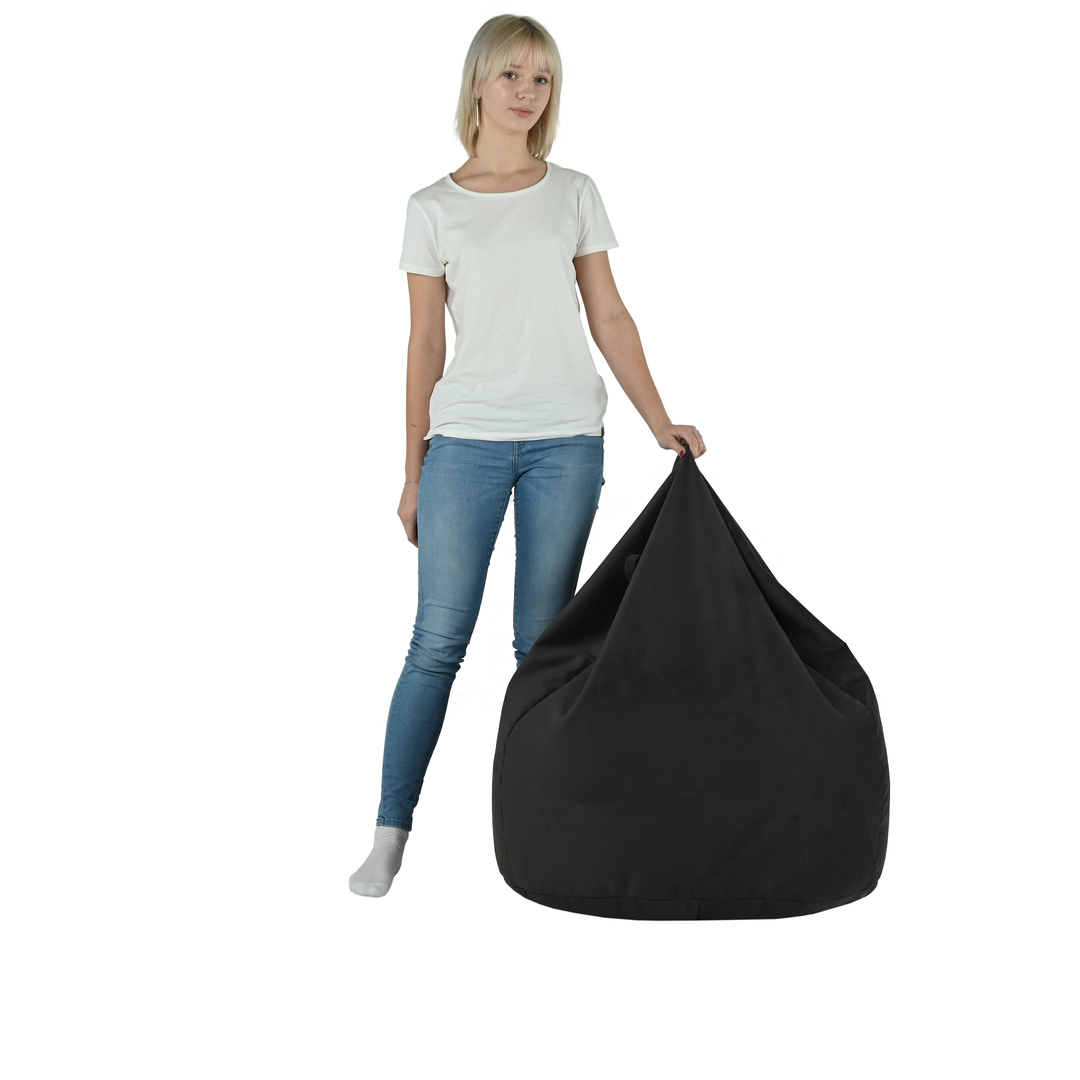
- Open the zipper: Slowly open the outer zipper, being careful not to damage the material. Pull out and unfold the inner cover so that it is laid out freely.
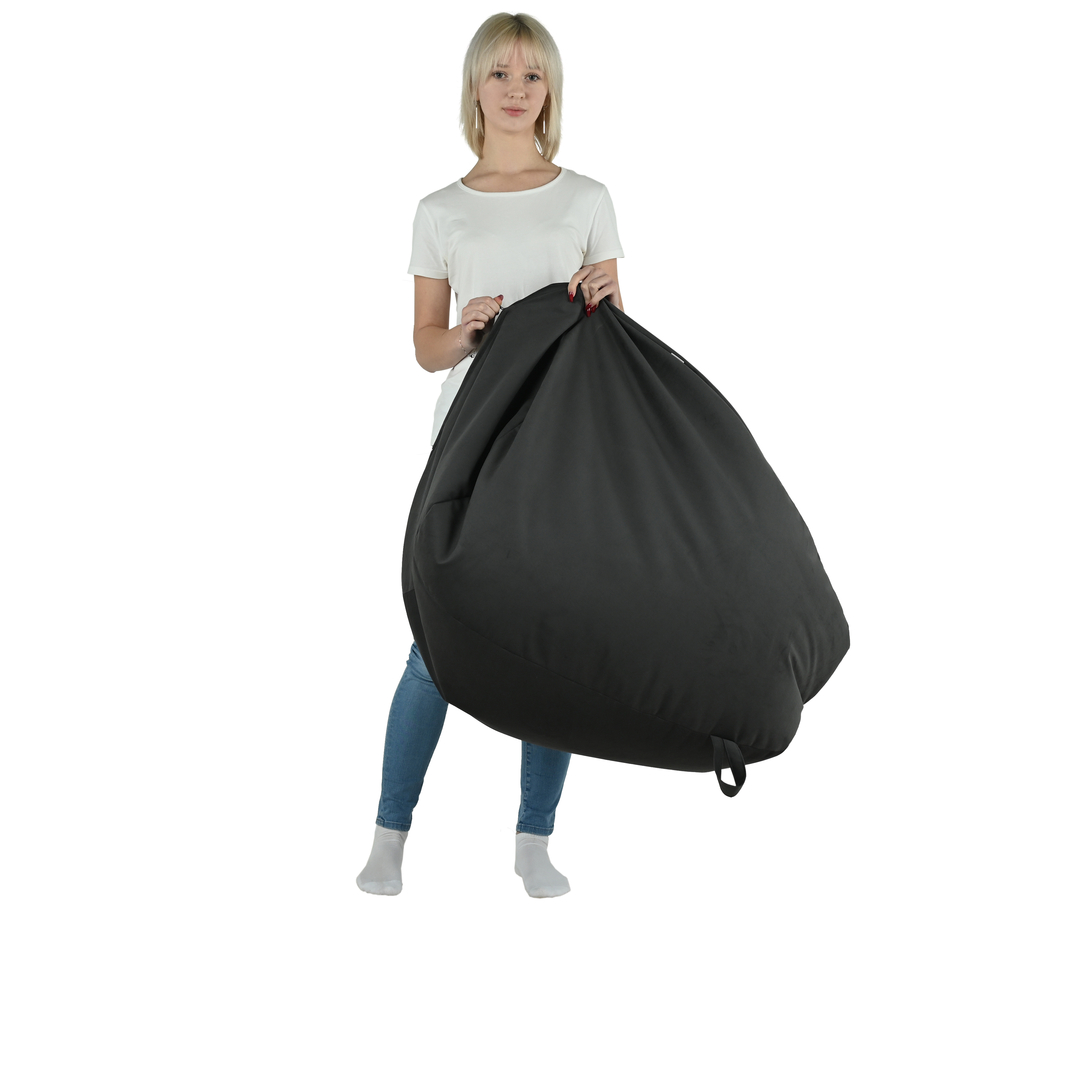
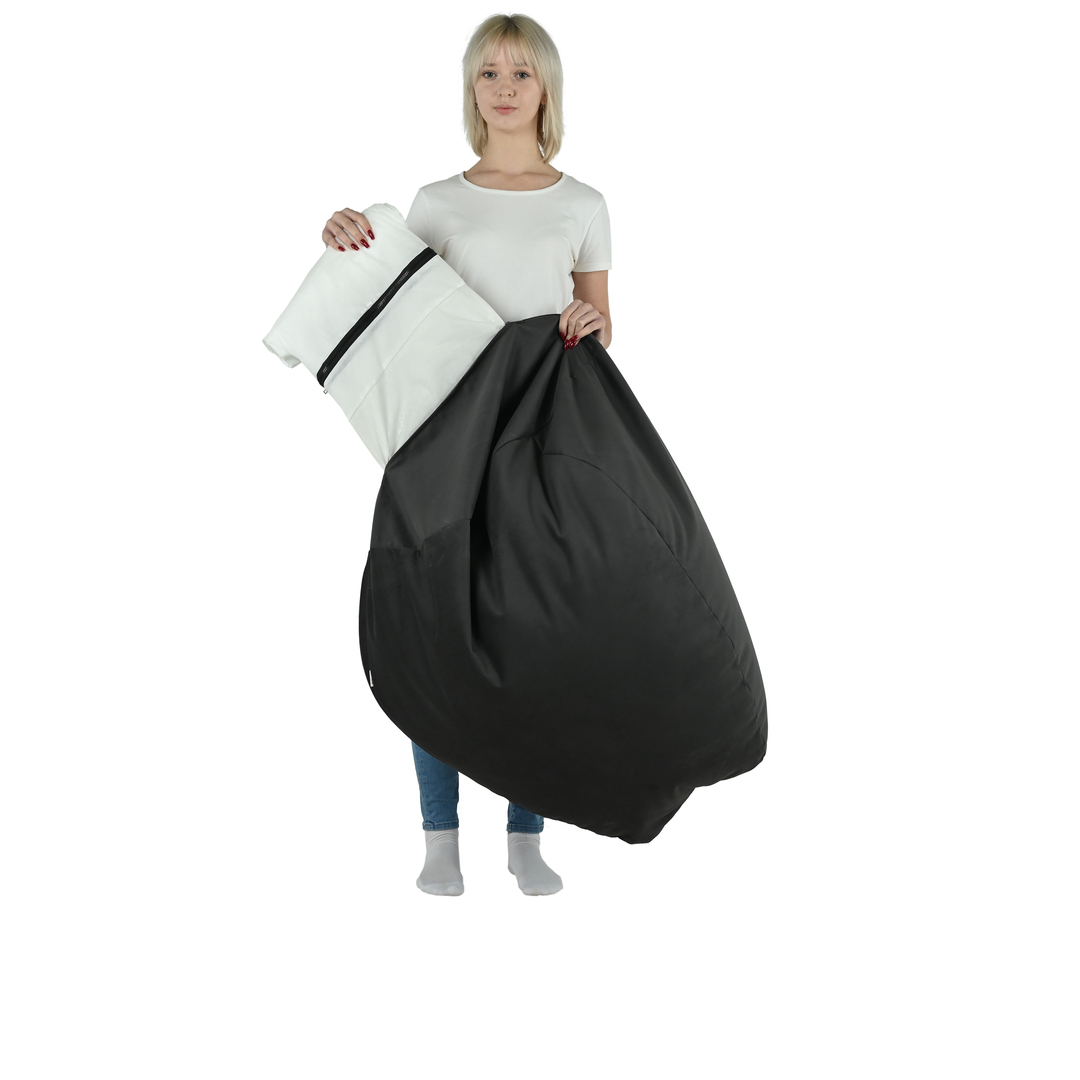
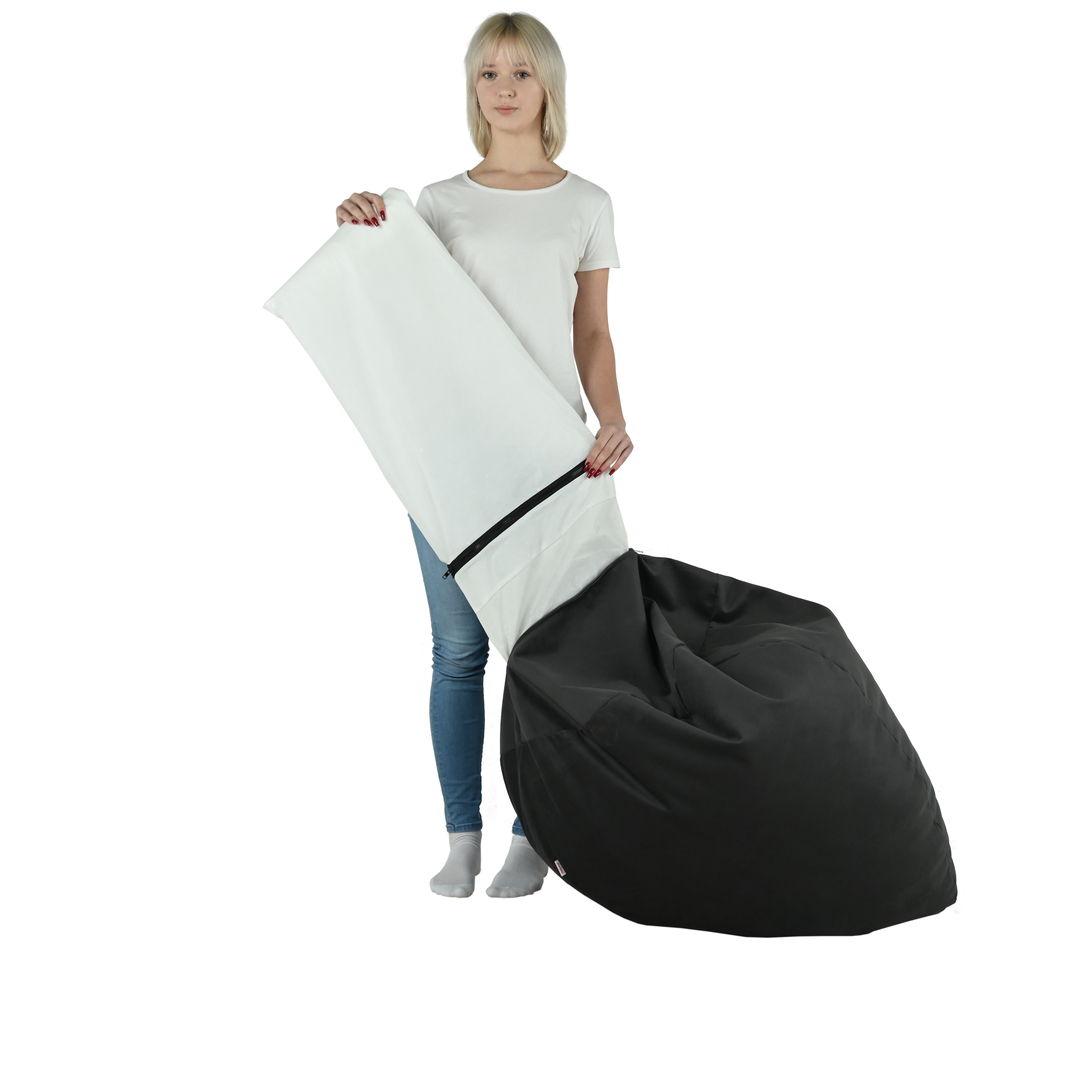
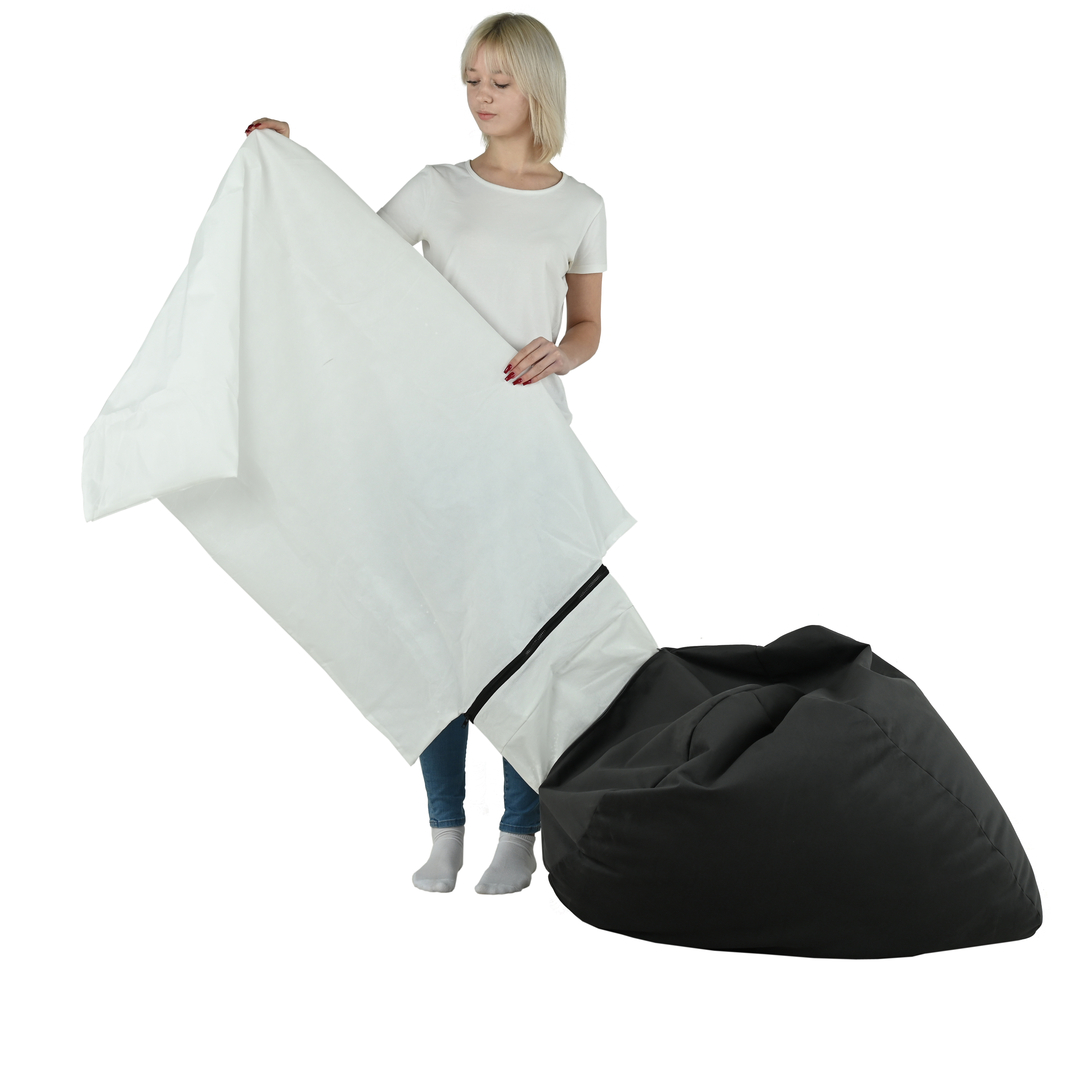
- Transfer the filling: Lift the product so that the polystyrene beads start to pour into the attached cover. Try to do this slowly to avoid spilling the beads.
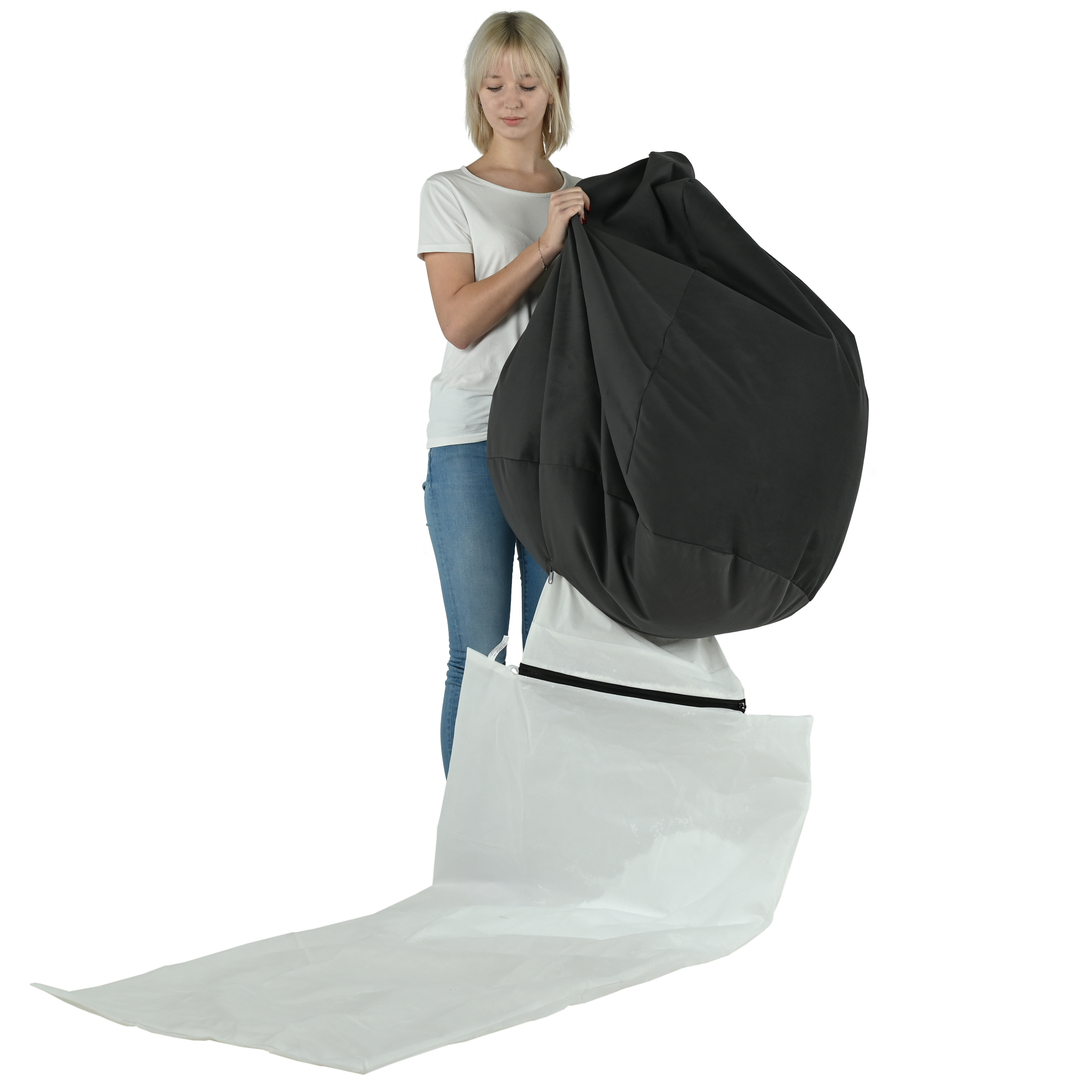
- Work carefully until all the filling has been transferred. Make sure that the beanbag is now empty and ready for the cover to be detached (there may be small amounts of beads left inside the product).
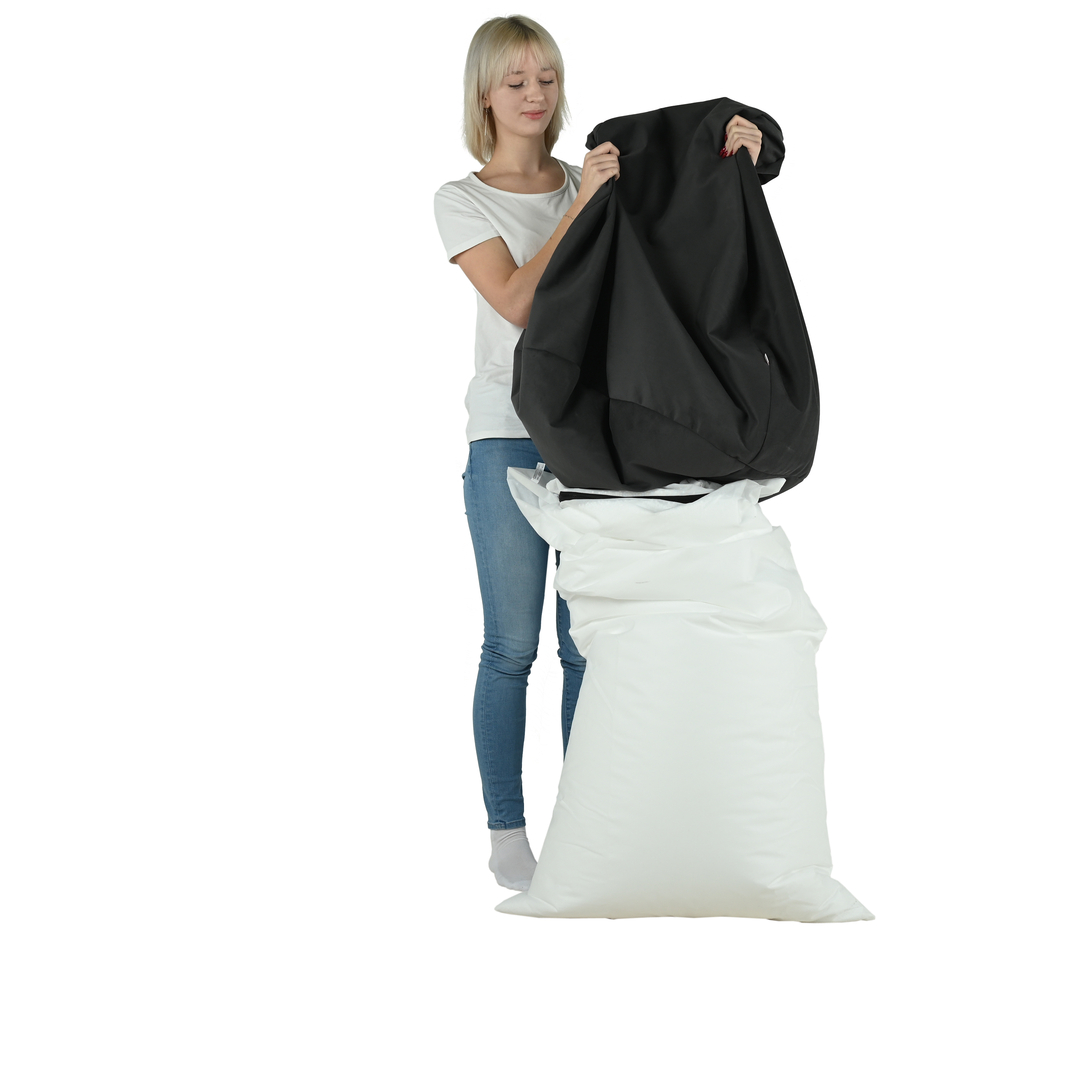
- Detach the cover: Now that the filling has been transferred, you can detach the cover from the product, being careful not to damage the material.
- Clean the cover: The cover can be washed, just throw it in the washing machine, following the washing instructions on the label (we recommend washing at 30 degrees). Remember! The cover must be closed! Make sure the zipper is closed.
- Dry the cover: After washing the cover, make sure it is well dried before refilling with polystyrene beads. Lay the cover flat in a place where it can dry freely.
- Refill the filling: When the cover is completely dry, reattach the cover to the filling using the zipper. Make sure the zipper is properly secured to avoid spilling the beads.
- Lift the cover with the filling and slowly pour until all the polystyrene beads are placed back in the beanbag.
- Close the zipper: After filling the beanbag, carefully roll up the extra cover (do not detach) and place it inside the beanbag. Close the outer zipper.
- Check the quality: After closing the zipper, check if the cover is properly fitted on the beanbag and that the filling is evenly distributed. Also, ensure that the zipper is well closed.
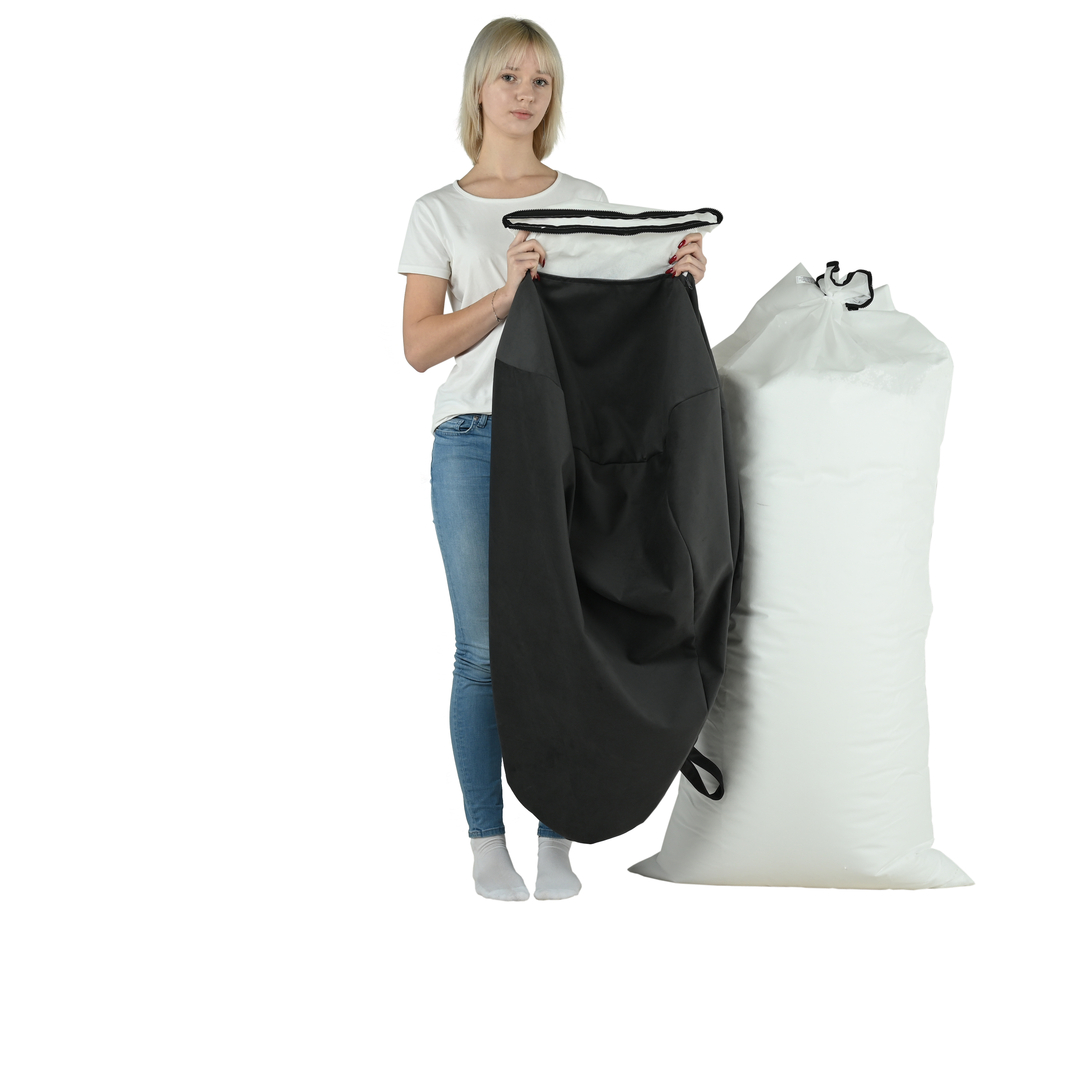
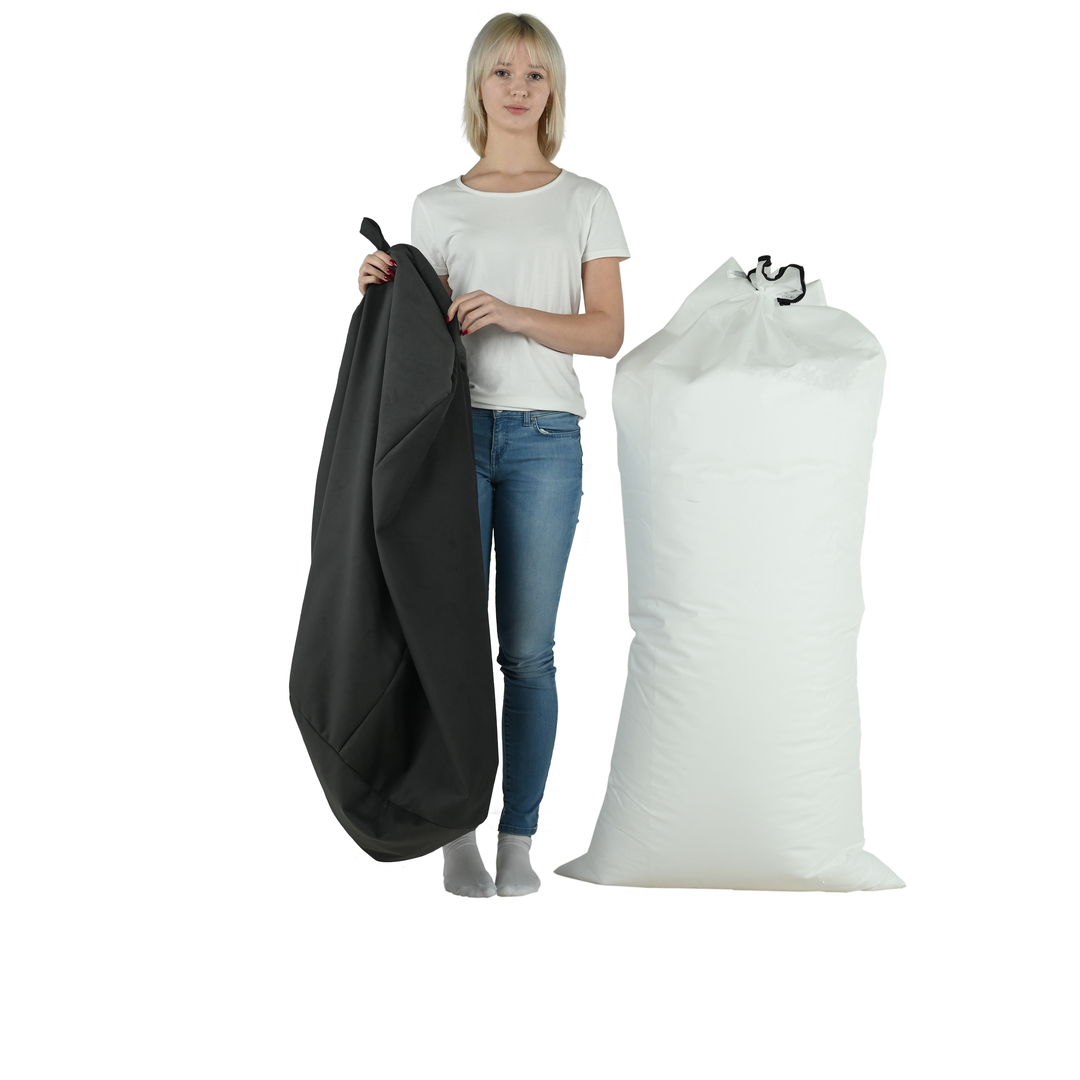
Enjoy your renewed beanbag: Congratulations! You have just completed the process of removing the cover and transferring the filling of the beanbag. Now you can enjoy a refreshed, clean, and comfortable beanbag. With this guide, removing the cover and transferring the filling will be easier and less stressful for you. Remember to always proceed with caution and keep the area tidy while performing these tasks to avoid unnecessary mess.
Washing the cover at 30°C — what to do and what to avoid
Most beanbag covers can be safely washed in the washing machine at 30°C. This is the optimal temperature that removes dirt and bacteria without risking damage to the fabric. Here are some practical tips to help you take care of the cover while washing:
What to do:
- Close the zipper before washing — this protects the zipper and prevents it from being damaged in the washing machine drum.
- Select a gentle programme — we recommend a programme for delicate fabrics or cotton with a spin of 600-800 rpm.
- Use liquid detergent — unlike powder, it does not leave white marks on dark fabrics.
- Sort laundry by colour — wash dark covers separately from light ones to avoid dye transfer.
- Check pockets and folds — ensure that no small items (money, clips) are left in the cover.
- Add vinegar to the rinse — optionally, a tablespoon of spirit vinegar will soften natural fabrics and remove detergent residues.
What to avoid:
- Do not exceed 30°C — higher temperatures may cause some fabrics, especially cotton and velvet, to shrink.
- Do not use bleach — it can permanently discolour or damage the colour of the cover.
- Avoid intense spinning — above 1000 rpm, the fabric may crease significantly, and the zippers may get damaged.
- Do not iron at high temperatures — most covers smooth out naturally after being laid flat; if ironing is necessary, use a low temperature and steam.
- Do not tumble dry — more on this below.
Drying the cover: lying flat or hanging? And what about the dryer?
After washing, it is crucial to dry the cover properly. We strongly advise against tumble drying, as high temperatures and intense movement can shrink the material or damage the zipper. Instead, we recommend natural drying methods:
- Drying flat — the best method for covers made from stretchy fabrics (velvet, plush). Lay the wet cover on a horizontal drying rack or a clean towel in a well-ventilated area. Turn it over every few hours to ensure even drying.
- Drying on a hanger — works well for covers made from quick-drying fabrics (polyester). Hang the cover by the loop or halfway down the zipper on a sturdy hanger, avoiding direct sunlight (which may cause colours to fade).
- Drying outdoors — if the weather permits, it’s best to dry the cover on a balcony or in the garden, in the shade. Fresh air speeds up the process and naturally refreshes the fabric.
- Avoid radiators — drying directly on a hot radiator can cause the material to warp and lose elasticity.
Typically, the cover dries within 24-48 hours, depending on the humidity and material. Ensure that it is completely dry before reattaching — moisture can promote mould growth inside the beanbag.
Differences in washing depending on the cover material
Not all covers are the same — the material is crucial for the washing and maintenance method. At Italpouf, we offer beanbags with various covers, each requiring slightly different treatment:
| Material | Characteristics | Washing | Drying |
|---|---|---|---|
| Eco-leather (synthetic leather) | Leather look, easy to clean, stain-resistant | DO NOT wash in the machine! Clean with a damp cloth and mild soap. For stubborn stains — use specialist products for eco-leather. | Wipe dry with a soft cloth. Avoid sunlight and radiators. |
| Velvet | Soft, velvety, pleasant to the touch, requires delicacy | Washing machine 30°C, delicate programme, light spinning (600 rpm). Liquid detergent. | Lay flat, turn frequently. After drying, gently fluff with a brush. |
| Corduroy | Ribbed structure, durable, vintage vibe | Washing machine 30°C, delicate cotton programme, spinning 800 rpm. Wash inside out. | Hang or lay flat, avoid direct sunlight. Iron inside out (low temp). |
| Plush (velvet) | Softest, luxurious, delicate | Washing machine 30°C, delicate programme, short spinning (600 rpm). Gentle liquid without bleach. | Lay flat, do not wring. Dry in the shade, gently fluff after drying. |
| Polyester fabrics (Premium Prints, Outdoor) | Durable, easy to maintain, quick-drying | Washing machine 30°C, standard programme, spinning 800-1000 rpm. | Hang or lay flat. Dries quickly, does not require ironing. |
Always check the label on the cover! The manufacturer provides the optimal washing and maintenance conditions for the given material.
How to remove stains from the beanbag cover?
Even the most carefully maintained beanbag is not resistant to accidental stains — spilled coffee, juice stains, shoe marks. The key to success is quick action. The sooner you start removing the stain, the greater the chance of completely cleaning the cover without washing it in the machine.
Food and drink stains
- Coffee, tea, juices — immediately absorb the excess with a paper towel (do not rub!). Dampen a clean cloth in lukewarm water with a bit of dish soap and gently dab the stain from the edges to the centre. Rinse with clean water and dry.
- Wine, ketchup, sauce — absorb the excess, sprinkle the stain with salt or baking soda (it will absorb the liquid). After 10 minutes, vacuum and wipe with a damp cloth with mild detergent. For stubborn stains: use a stain remover before washing in the machine.
- Chocolate, ice cream — scrape off the dried excess with a blunt knife. Wipe with cold water (warm sets the stain!), then use dish soap. Wash the cover in the machine at 30°C.
Greasy stains (oil, butter, balm)
Sprinkle the stain with potato starch, cornstarch, or talcum powder — it will absorb the grease. After 30 minutes, vacuum and dab the area with a damp cloth and dish soap. If the stain remains, apply a greasy stain remover and wash in the machine.
Cosmetic stains
- Lipstick, lip gloss — use a cotton pad with micellar water or makeup remover. Gently dab until the stain disappears. Wash in the machine.
- Nail polish — use nail polish remover (check first on an inconspicuous area!). Absorb the excess and wash.
Biological stains (urine, blood, vomit)
Always clean with cold water (warm sets the protein). Use an enzymatic stain remover or a solution of water and vinegar (1:1). Dab until the stain is completely removed, then wash the cover in the machine. If the stain is fresh, you can sprinkle it with baking soda — it will neutralise the odour and absorb the liquid.
Eco-leather — special approach
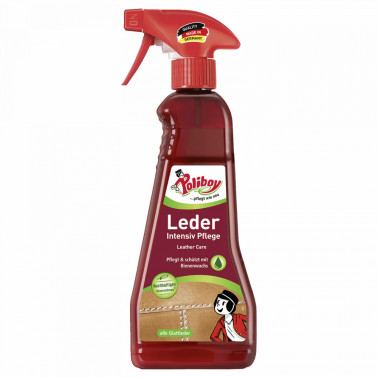
Eco-leather products should not be soaked! Wipe the stain with a damp (not wet) cloth with mild liquid soap or eco-leather cleaning product. Immediately dry with a clean, dry cloth.
Replacing the cover: when and how to choose a new one?
Even the best-maintained cover can wear out over time — the colour fades, the zipper breaks, and the fabric loses elasticity. The good news is that you don’t have to buy a whole new beanbag — you can simply replace the cover! This is a much cheaper solution.
When to replace the cover?
- Damaged zipper — if the zipper does not close or keeps unzipping, despite repair attempts.
- Material wear — discolouration, abrasions, tears that cannot be sewn up.
- Change of interior style — the most common reason! You are changing colours in the living room and want to match the pouf to the new arrangement.
- Refreshing — after years of use, the beanbag looks dreary and washing does not help.
How to choose a new cover?
When purchasing a new cover, pay attention to a few key things:
- Size — the cover must fit your beanbag model (L, XL, XXL). Check the dimensions in centimetres!
- Material — match to your lifestyle: if you have children/pets, choose durable polyester; if you value luxury and have time for maintenance, opt for plush or velvet.
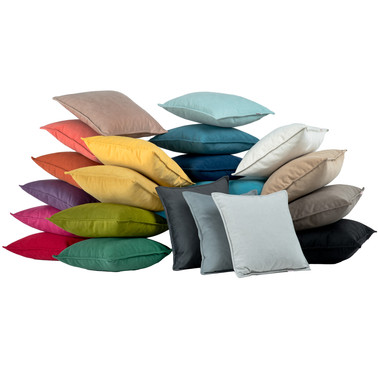
- Colour and pattern — neutral colours (grey, beige, navy) fit most interiors, but you can also choose bold colours (mustard, bottle green, burgundy) as a colour accent.
Where to buy a spare cover?
If you purchased a beanbag from Italpouf, you can order a spare cover directly from the manufacturer — our store offers covers for selected models, in various colours and materials. You can also contact our customer service department, which will help you choose the perfect cover for your model. The cost of a spare cover is usually 30-50% of the price of the entire beanbag — much cheaper than buying a new piece of furniture!
Cover maintenance: how to extend its lifespan?
Regular, proper care will allow you to enjoy a beautiful cover for longer. Here are some practical tips:
- Vacuum weekly — use a soft brush attachment to remove dust, pet hair, and crumbs. This will prevent dirt from embedding in the fabrics.
- Air out the beanbag — every few weeks, air out the cover on the balcony or open windows in the room. Fresh air will remove unpleasant odours.
- Avoid direct sunlight — prolonged exposure to sunlight causes colours to fade. If possible, position the beanbag away from the window.
- Remove stains immediately — the quicker you react, the easier it will be to clean.
- Wash the cover 2-3 times a year — regular but not excessive washing will extend its lifespan.
- Check the zippers — occasionally lubricate the zipper with a graphite pencil or special zipper lubricant — this will prevent it from getting stuck.
- Do not jump on the beanbag — especially children love to do this, but excessive point loading can damage the seams and zippers.
Frequently Asked Questions
Can I buy just the cover without the filling?
Yes! At Italpouf, we offer the option to purchase just the spare cover for most of our beanbag models. This is a great solution if you want to refresh the look of your furniture, change the colour, or replace a worn cover. Contact our customer service department, providing the model and size of your beanbag — we will help you choose the right cover.
How much does a spare cover for a beanbag cost?
The price of the cover depends on the size, material, and model. Typically, the cost is 30-50% of the price of the entire beanbag. Covers made from premium materials (plush, velvet) are more expensive than those made from standard fabrics (polyester). A detailed price list is available on our website or through direct contact with customer service.